

- cross-posted to:
- globalnews@lemmy.zip
- cross-posted to:
- globalnews@lemmy.zip
The rules-based order was always partly a legitimation device for American hegemony, but it was a device that required European buy-in — and that buy-in gave Europe real leverage. Trump has abandoned the legitimation mechanism entirely. He does not need Europe’s moral endorsement because he has dispensed with the need for legitimacy altogether. Power is its own justification. That is precisely what makes the European establishment’s eager compliance so self-defeating.
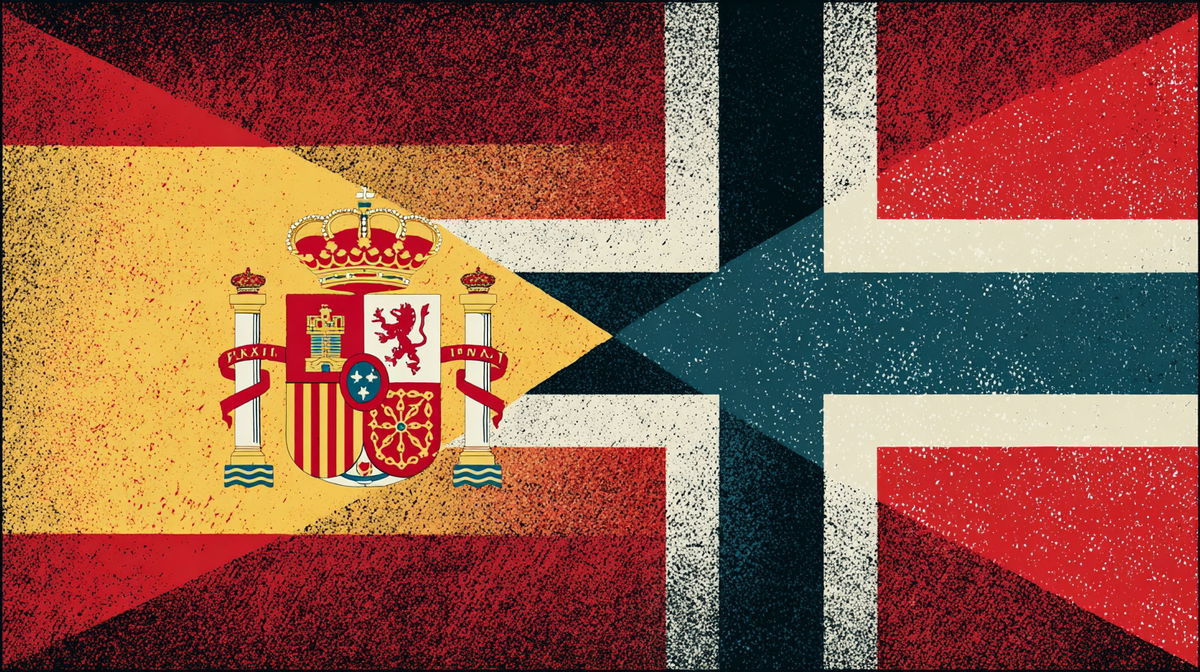
Sánchez is dragging Europe’s centre-left toward articulating a foreign policy grounded in international law, genuine multilateralism, and the understanding that the international order is rebuilt through principles consistently applied, not selectively invoked. What makes the S&D shift notable is that arguments long dismissed as too radical — when made by voices like Yanis Varoufakis — are now coming from governing parties.
The article is such obvious nonsense. Its central argument is that vocal protests will give Europe a weight in the world (Spain). Keeping a low profile while building Europe’s strongest armed forces and energy independence will detract from Europe’s weight in the world (Germany). Who honestly believes this?
EU is not a superpower like US Or China. Mid-sized powers rely on international law and multilateralism to survive and exert influence. If the world devolves into a purely “might makes right” arena (which the author argues Trump is doing), Europe inevitably loses.
Based on what assumption is China a super power but the EU isn‘t? Because it isn‘t a single state? Because economically it plays in the same league.
Yes. How can you be a superpower when a single country like Hungary can veto important decisions?
It doesn’t even have it’s own army. Only 27 separate militaries with different languages, commanders, equipment and it relies on US-led NATO for security.
If the EU is not a superpower, then it does not have the influence on the world to maintain a rules based world order (international law, mutlulayeralism) against the USA, China, Russia, India, … This is wishful and illogical thinking
The EU’s Single Market is still large and wealthy enough that it routinely forces the US and China to adapt to its rules. That is a massive form of global influence.
Also, multilateralism isn’t the EU trying to unilaterally enforce rules against the USA, China, Russia and so on. It’s the EU teaming up with other like-minded middle powers (like Japan, Canada, Australia, Brazil, etc.), and international institutions to create diplomatic and economic costs for rule-breakers. But if EU is inconsistent in this regard (like it was with US Iran situation) no one will take it seriously. Rules cannot apply only when it’s convenient to you. That is what the author was pointing out.
But you’re not wrong. He’s approaching the issue from a Liberal Institutionalist perspective, while you’re viewing it through the lens of Structural Realism. Both valid perspectives. One point that both of you will agree on is that EU needs to get independent from the US ASAP.