Industrial sites are dangerous and that’s why workers receive safety training and equipment.
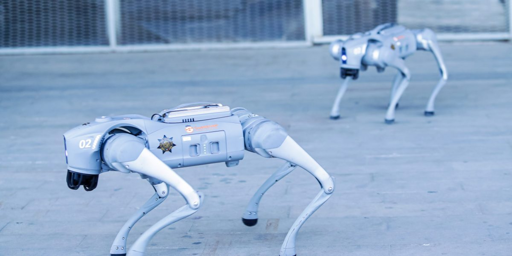
These are not intended to interact with the public, they’re intended to replace manned security patrol routes. They’re protected from being a danger to the public by chain link fences and locked doors. The workers who operate them and work around them receive safety training.
In addition to the tens of thousands of dollars of proximity sensors, there’s also a giant red button on their back which shuts them down immediately:
Having robots lets the human workers not go into dangerous situations unnecessarily. Having to patrol inside of an area where halon fire suppression systems are used is inherently dangerous and is more of a common occurrence than having a random untrained and unescorted member of the public enter into a secure area and trip.


Industrial sites are dangerous and that’s why workers receive safety training and equipment.
These are not intended to interact with the public, they’re intended to replace manned security patrol routes. They’re protected from being a danger to the public by chain link fences and locked doors. The workers who operate them and work around them receive safety training.
In addition to the tens of thousands of dollars of proximity sensors, there’s also a giant red button on their back which shuts them down immediately:
Having robots lets the human workers not go into dangerous situations unnecessarily. Having to patrol inside of an area where halon fire suppression systems are used is inherently dangerous and is more of a common occurrence than having a random untrained and unescorted member of the public enter into a secure area and trip.