
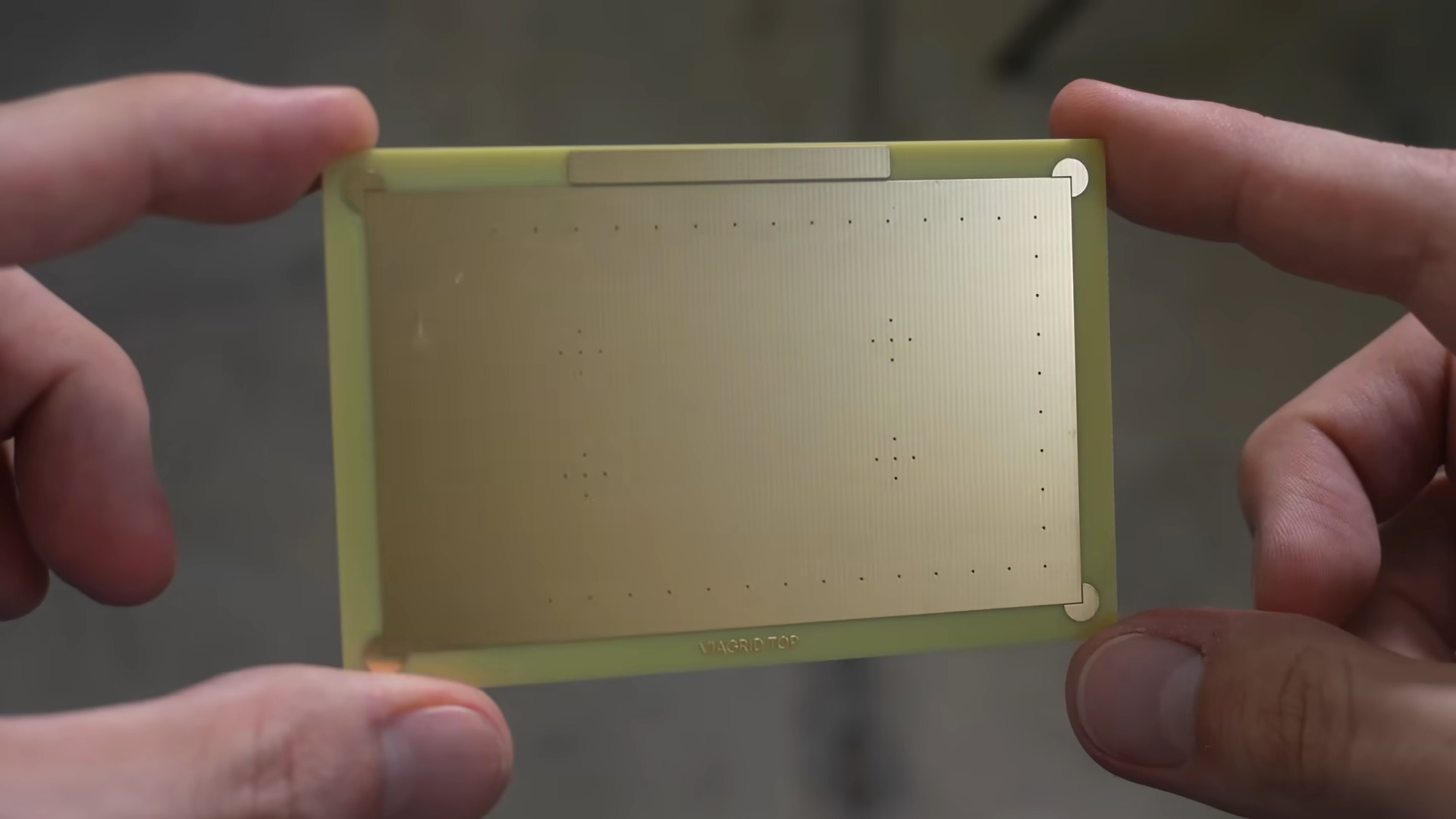
Breadboards are great, but as the world moves more and more to having SMD as a standard, prototyping straight PCBs is becoming more common. If you’re mailing off to China for your PCBs, it’s shockingly quick for what it is, but a one-week turnaround is not “rapid prototyping”. [Stephen Hawes] has been on a quest on his YouTube channel for the ideal rapid-prototyping PCB solution, and he thinks he’s finally got it.
Now, if you’re only doing single-layer PCBs, this is a solved problem. You can mechanically mill, or laser cut, or chemically etch your way to PCB perfection, far faster than the Chinese fabs can get you a part. If you want a double-sided board, however, vias are both a pain in the keister to do yourself, and a rate-limiting step.
Single sided PCB assemly, Single sided LCD controller with many, many vias, single sided PCB layout screenshot, all with vias. Single sided ≠ single layer which I think is where the confusion was coming in for me.
But you are right, looks like I have a lot more to learn. I have only ever made a 1 layer of copper PWM speed controller because I guess I am not good enough to make 1 layer PCBs. Almost every design I have ever worked on would be physically impossible to use a 1 layer PCB simply due to the IC package pinouts literally not allowing it. They get around the via problem in your picture quite cleverly by using a dozen jumper wires as via+2nd copper layer. Plus there are no non-discrete ICs which helps a lot.
I would love to know the supplier that Philips uses here, none of my suppliers were willing to do such hand-wiring-intensive work for anything less than a fortune.
But I admit, you have proven me wrong in that was quite the exaggeration to say that “literally every part of electronics design” requires multi layer PCBs. Though I never meant to imply that people weren’t engineers doing this. I was specifically addressing the response to OP because it was about SMD using a single sided board for SMD components and OP specifically talked about a replacement for sending boards to China or common PCB houses., but I reacted in way way too broad of statements which was wrong.
There are thousands of write wound boards, hand wired boards, or projects like this guy which are very well done and well engineered projects. Wire-wound PCBs were the first GPS modules also, and they were 10x the engineers I could ever hope to be.